
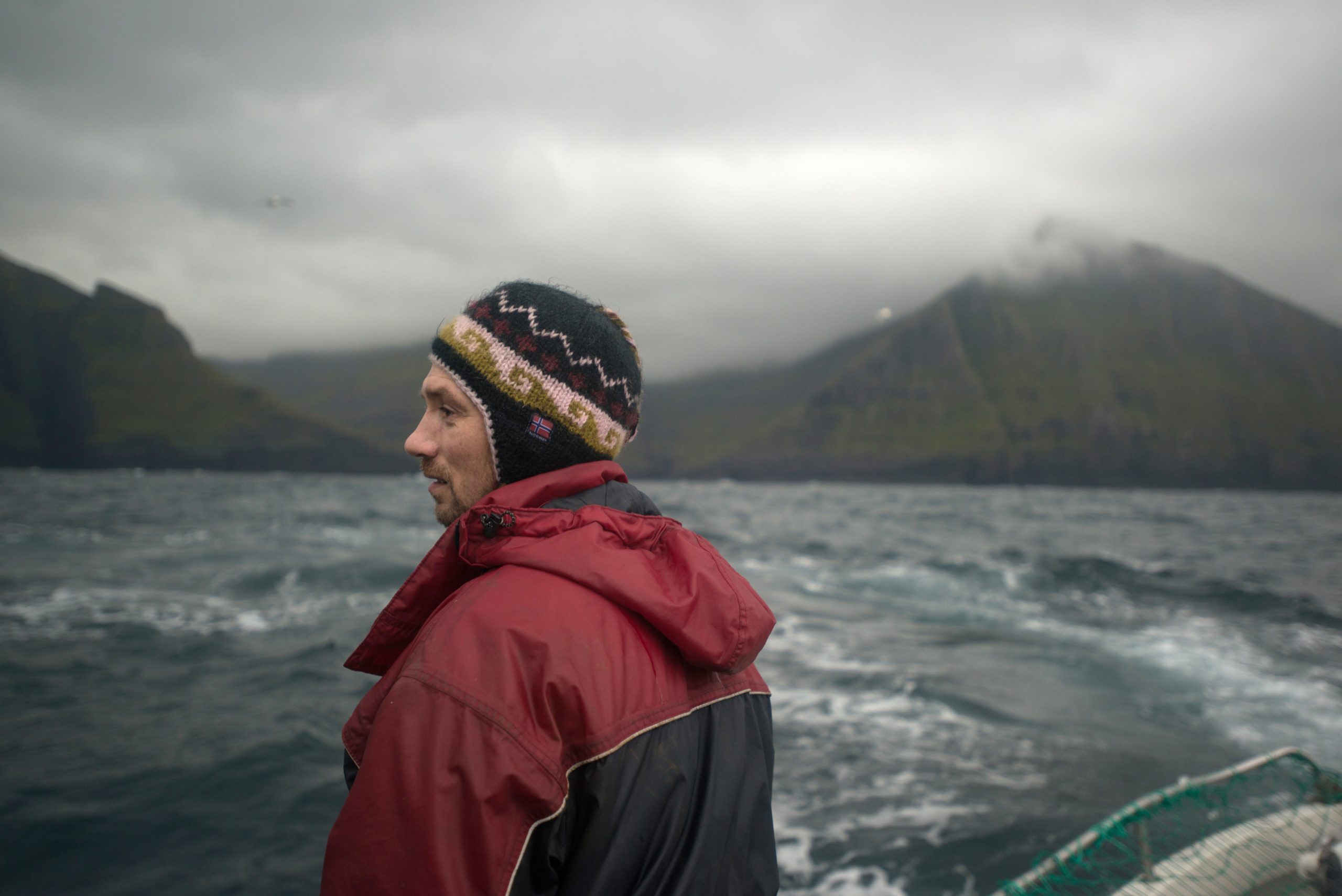
The Islands and the Whales
- Director
- Mike Day
- Languages
- Faroese, English (with English subtitles)
- Release
- 2016
- Runtime
- 84 min
- Waters and Lands
- North Atlantic Ocean; Faroe Islands [Denmark]
Synopsis
Whaling in the Faroe Islands, known as grindadráp, has been practiced for over a thousand years, playing a central role in people’s diets, cultural identities, and social relations. The Islands and the Whales examines how contemporary mercury and plastic pollution put Faroese foodways at risk. Director Mike Day follows Chief Physician Pál Weihe as he works to raise awareness of the growing health risks of eating whale meat, due to high levels of mercury contamination. The film exposes a profound tension: whether to continue consuming whale and accept the health consequences, or to stop eating whale and accept profound losses of culture and identity. Day follows this tension as it unfolds in different ways across the Faroe Islands, inviting deeply personal reflections on the intersections of food sovereignty, cultural continuity, and public health. The Islands and the Whales reveals the uneven geographies of ocean pollution, highlighting the gap between those responsible for ocean pollution, and those who bear its greatest burdens.
Director Bio
Mike Day is a Scottish director, producer, cinematographer, and composer. Originally trained as a lawyer, in 2009 Mike left the city behind and headed off on a boat with a camera to the Scottish Outer Hebrides. His first film, The Guga Hunters of Ness (2011), about the last seabird hunters in the UK and EU. The film aired on BBC2, and led to the creation of his first feature documentary, The Islands and the Whales, which won a Peabody Award and BAFTA and Emmy nominations. Mike continues to produce new films today through his independent production company Intrepid Cinema.
Distribution
Intrepid Cinema
https://theislandsandthewhales.com/watch
Contact: https://intrepidcinema.com/contact
There’s a North Star, I might put it, that should be a direction for all sides to focus on: how to keep the oceans from being polluted, and how to live with the whole world without damaging it.
Teaching Resources
Interview with Director Mike Day
Bogadóttir, Ragnheiður, and Elisabeth Skarðhamar Olsen. 2017. “Making degrowth locally meaningful: the case of the Faroese grindadráp.” Journal of Political Ecology 24 (1).
Fielding, Russell author. 2018. “The Most Exciting Word in Faroese.” In The Wake of the Whale: Hunter Societies in the Caribbean and North Atlantic. Harvard University Press.
Weihe, Pál, and Høgni Debes Joensen. 2012. “Dietary Recommendations Regarding Pilot Whale Meat and Blubber in the Faroe Islands.” International Journal of Circumpolar Health 71 (1): 18594.